

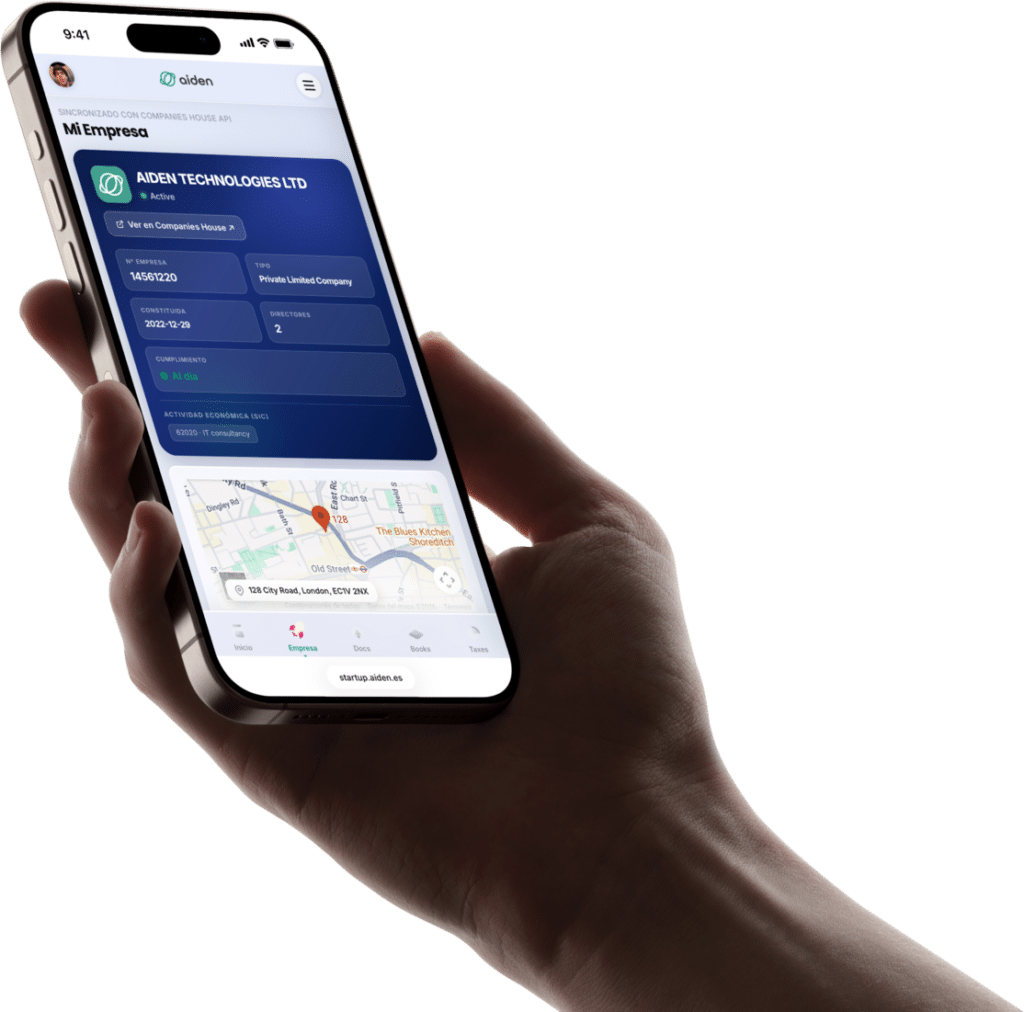

Setting up a company in the United Kingdom from abroad has become one of the smartest decisions for entrepreneurs, freelancers and digital business owners. The process is 100% online, requires no travel, and in under 72 hours you can have your Limited Company (LTD) fully operational, with a registered address in London and a bank account included.
But doing it properly (avoiding problems with your home tax authority and making the most of the UK advantages) means understanding a few key concepts that almost nobody explains. In this complete guide, updated for 2026, you will find everything you need: why the UK is still attractive after Brexit, the types of company, real taxation, double taxation, how to open a bank account and the definitive step-by-step process.
Why set up a company in the United Kingdom in 2026?
For decades the United Kingdom has been one of the preferred destinations for international entrepreneurs. Despite Brexit, it keeps an agile, tax-competitive and highly prestigious business ecosystem. These are the specific reasons why thousands of founders from around the world choose the UK every year:
- Incorporation in under 24 hours: Companies House processes most applications the same day.
- Corporation Tax of 19% on profits of up to £50,000, compared with the general rate of 25% in Spain, for example.
- No self-employed contribution: the directors of an LTD do not pay the mandatory monthly contribution that exists in Spain, for example.
- A very high VAT threshold: you only register if you invoice more than £90,000 a year.
- Share capital from £1: you do not tie up 3,000 euros as you would with a Spanish SL.
- International prestige: a British LTD conveys solidity to clients and investors.
Tax comparison: United Kingdom vs. Spain (as an example, since every country has its own rules)
| Aspect | United Kingdom | Spain |
|---|---|---|
| Corporate tax | 19% (up to £50,000) / 25% (over £250,000) | 25% general |
| VAT | 20%, only if you exceed £90,000/year | 21%, from the first euro |
| Self-employed contribution | None | ~€230-294/month |
| Minimum share capital | £1 | €3,000 (SL) |
| Incorporation | Under 24 hours, online | 4-8 weeks, with a notary |
Is it legal to set up a UK company from abroad?
Yes, it is completely legal. Anyone living outside the UK can register and act as director of a British Limited Company without being a UK resident, without travelling and without needing British partners. British law allows directors and shareholders of any nationality and residence. You only need a valid passport or ID card, a registered address in the United Kingdom, an available name at Companies House and at least one director, which can be you.
Types of company: LTD vs. Sole Trader
A Limited Company (LTD) is an entity with its own legal personality, where your liability is limited to the capital you contribute. A Sole Trader is the equivalent of a self-employed person, where you are liable with your personal assets. For most entrepreneurs, the LTD is the recommended option because of the asset protection and the professional image.
💡 At Aiden Startup we help you build the best structure for your project, with expert advice included in all plans.
Taxation and double taxation: what you should know
An LTD registered in the UK pays Corporation Tax there on its profits. You, as a tax resident of your own country, must declare the salaries and dividends you receive from the company there. In Spain, for example, they go in your IRPF return, and Spain and the United Kingdom have signed a convention to avoid double taxation, so you do not pay twice on the same profits. Each country of residence has its own rules and its own double taxation treaty, so check the one that applies to you. Also in Spain, if your shareholdings plus other assets abroad exceed 50,000 euros, you must file Modelo 720 before 31 March each year.
How to set up your Limited Company step by step
- Choose the name and check its availability at Companies House.
- Prepare the documents: Memorandum and Articles of Association.
- Define the director and shareholders: you can be the only one.
- Provide the registered address in British territory.
- Register the company with Companies House (from £50, approval within 24 hours).
- Register with HMRC for Corporation Tax.
- Open your bank account with Wise or Revolut Business.
How to open a bank account for your British company
Opening an account with a traditional British bank as a non-resident is very difficult. The practical solution is digital banks: Wise Business (a pound account with its own IBAN plus euro and dollar accounts), Revolut Business (ideal for teams, with sub-accounts per currency) and Monzo Business (very focused on the local British market). All are managed 100% online and accept non-resident directors.
How much does it cost to set up and maintain a UK company?
| Item | On your own | With Aiden Startup |
|---|---|---|
| Registration at Companies House | £50 | Included |
| Registered address in London | £200-500/year | Included |
| Bank account | Self-managed | Included and guided |
| Annual Confirmation Statement | £34/year | Included in the PRO plan |
| Total time | 2-4 weeks, with a risk of mistakes | 72 hours guaranteed |
🚀 At Aiden Startup we incorporate your company in the UK or Delaware in 72 hours, with a registered address, bank account and an advisor included. See plans →
Frequently asked questions
You do not need to be a resident or to travel. The whole registration at Companies House is done online. You only need a registered address in the UK, which Aiden Startup provides in all its plans.
The company pays tax in the UK on its profits. You, as a tax resident of your own country, declare the salaries and dividends you receive there. In Spain, for example, they go in your IRPF return. The double taxation treaty between the countries involved is meant to stop you paying twice.
It is the Spanish informative return on assets held abroad, so it applies if you are a tax resident of Spain. If your shareholdings plus other assets outside Spain exceed 50,000 euros, you must file it before 31 March each year.
Registration at Companies House, the certificate of incorporation and the registered address are completed in around 72 hours. The bank account can take a few more days depending on the provider.
Not significantly for digital services. Trade keeps flowing thanks to the EU-UK agreement of 2021. What changed are some customs procedures for physical goods, not for services.